Tuesday, 28 April 2009

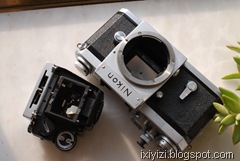
Nikon F viewfinder

Once upon a time in a galaxy far far away…..

DSC_9911

Tuesday, 14 April 2009

D5000 video


Yeah right use it on the beach, great idea

Clearly Nikon want you to buy a lot of cameras...

Also not so sure this is the right camera for kids and preteen, it's fairly complicated and relatively pricey.

Nikon D5000

IT'S OUT !!!! (But D400 not...)

The dark lord ... with a microphone (image Nikon)

D5000 is the update of the D60 entry model DSLR - so it's compact, DX APS-C format and has no auto focus motor, needs lenses with built-in AFS motor basically all DX format lenses in Nikon range are (except 10mm fisheye). Does have vibrating sensor cleaning system plus airflow. Uses SD card. No dedicated grip foreseen by Nikon (possibly a market brand will be available as it is the case for D40/60, although not sure existing one can be used).

It borrows from D90/300 higher range models: CMOS 12 Mpixels image sensor and image processor, so we can expect very good image quality and above average low ISO performance, which I hope will be confirmed in future tests. AF sensor is the 11 point module with focus tracking capacity found in D90, which is clearly an upgrade from D60's 3 sensors AF module.

What's really new: movable screen although lower resolution than D90/D300, Live View but slow AF performance in this mode, movie recording capacity, upgraded battery, new body but with traditional Nikon layout.

Movie mode: 16/9, 720p, 24fps with HDMI output - so no full HD. No autofocus during recording but stablisation functions with VR lenses. Max recoding in high quality 720p format 5 min.

What I consider weak points are rather related to the structure of the camera, where economical imperatives clash with what you would expect in a Nikon camera that is many dedicated buttons, big bright finder to facilitate composition and a sturdy frame. In fact the viewfinder on the D5000 is even smaller than on the D60, there is no rotating selection wheel in front of shutter button, no depth of field preview button, etc. The camera is clearly not weather sealed contrary to what Nikon promotional video seems to imply (see other posting)

Raw capacity: Image processor is 12bit only and Raw mode is compressed - those using Raw intensively will probably turn to more capable upper end cameras.

The positive aspects is that basically you get a D90 image quality (possibly slightly improved by 6 further months of devlopment) plus movable LCD screen (which is always cool) in a compact package.

For manual lenses shooters, the camera while probably unable to meter as there is no metering coupling. This means however that any Nikon lens (with very few exceptions) produced in the past 50 years can be mounted on this camera. And while no auto focus will (ever) be available with manual lenses (obviously...), you can always use the focus confirmation function in the finder.

In addition, all lenses can be used with live view and movable LCD which is interesting in Macro photography. The camera has an automatic function for the correction of lateral chromatic aberration (which is a common problem with older lenses used for digital) and additional cool in camera retouching options like perspective control, D-lighting, etc.

Also, I would be courious to try some older lenses for movies (AF doesn't work with movie mode anyway).

As an interesting note, the D5000 has a dedicated socket to be used with additional GPS module, which will make geotagging simple.

Price is around 700-800 $/Eur body only and 800-900 $/Eur with 18-55 VR kit lens.

The D5000 at first look does not sound like terribly competitive. Frankly at that price I would either spend a little more, forego the movable LCD screen and buy the D90 or use a Canon 500D (possibly with a F/EOS adapter ring) .

But if you want an uptodate Nikon camera in a more compact package, the D5000 is certainly a competent camera.
Friday, 27 March 2009

Good news for wide shooters

The main drawback of Digital is that it kills wide angles.

Let me explain: in APS-C format, given sensor magnification you need to go 12/14mm to get to normal 20mm equivalent. Normal primes are not adapted for digital (deform/cost a lot).

Full frame: normal wides become wides again, but formulas rarely adapted for digital.

Fortunately for APS-C cameras a number of wide zooms have been developed both by camera manufacturer and independent to address these points (reach, digital quality).

Nikon released a 12-24 f4G IF ED to address the requirements of pro shooting with D2X. It has 2 ED glass elements and 3 aspherical lenses.

Roumors have sourfaced recently about the possible release of a new (hopefully cheaper) 10-24 DX f3,5-4,5G.

Canon has a EF-S 10-22mm f/3.5-4.5 USM which has range (16-35mm eqiv.), quality (3 asph lenses) and compactness.

Indipendent manufacturers have provided alternative zooms:

Sigma announced recently a new version of its 10-20mm zoom which is this time is a
f3.5 constant aperture.

Tamron also has released a new lens with more range (10-24mm f3.5-4.5) which replace its wide zoom that was limited to 11-18mm range (which is also marketed by Sony).

Tokina has a 12-24mm f4 constant, which has been upgraded with internal motor to be used with entry Nikon model without AF motor. Pentax/Samsung is same lens. It is a quite solidly built lens and zooming and focus ring are pleasantly damped.

Main characteristics of such zooms are:

- relatively heavy - still usable for reportage

- relatively expensive - begs the serious question whether it is really a lens you need every day

-
all have distorsions - need to spend time on Photoshop to correct

- all have other optical shortcomings (soft corners, flare, etc.) to various degrees - Nikon/Canon probably being the better corrected

- Not adapted for full frame - although some might be used at upper end settings (18-20mm equiv.) for desperate cases.

- All use big filters (77-82mm) that in most cases need to be slim type to avoid (further) vignetting (add at least 50$ to your budget)

- Lower wide angle setting difficult to cover with most flash.

Probably, the best is to use wides with full frame cameras.

APS-C wide angle zooms offer a compromise and all
offer competent packages for around a pound in weight and half a grant in cost (except Nikon and Canon which cost more).

The question
remains whether extreme wide-angle zooms can be used hand held. The lens need to be horizontal to avoid perspective deformation which already with primes would recommend for tripod use all the time. The zooms are not so fast and probably not at their best at wide apertures, so usability in low/available light is limited unless used with high ISO proficient cameras such as D300.

The good news is that if you like hyper-focal these lenses have plenty and this is further enhanced by the digital sensor - so it will be hard to work on defocus areas. Also, close focus is often very interesting (around 24cm in most cases).

Finally, if you really need to go for a wide zoom with an APS-C cameras, the choice is made easier by the wider offer on the market and clearly competitors have done a lot of work to challenge the market leaders.


Lumix G1 lens adapters

The G1 is now in stores at around 650$ with 14-45 kit lens.

The camera constitutes an interesting attempt to achieve a compact DSLR mainly by doing without a reflex prism, which is replaced by an electronic viewfinder. This results in a shorter pitch between lens and sensor. The bayonet and lenses can be made more compact also. The new format called micro 4/3, is based on the 4/3 standard achieved by mainly by Panasonic and Olympus. Both provide a x2 lens magnification.

The camera is nice and well designed and has been well received by the press and specialized reviewers. The main plus point noted are the good ergonomic, handling, menu navigation, out of camera image quality, etc. Minuses are small captor and consequent limitations in terms of noise, dynamic range etc. battery consumption the inevitably limited performances of the electronic viewfinder. Also pointed were limitations concerning autofocus with other 4/3 lenses via dedicated adapter, auto white balance performances that were addressed in firmware update.

Lack of video capacity is being addressed by new model Lumix GH1, that Panasonic anounced at PMA. The new model is an HD video capable upgrade of the G1 - it should be available at the end of April.

Competition, Pentax/Samsung have also announced their respective version of a compact so-called hybrid DSLR without optical prism along the lines of the Lumix G1, although with bigger APS-C sensor (comparable to DSLR). (see Samsung NX) (Rumors of Pentax hybrid see link)

So the interesting aspect for me is the possibility to have a high resolution camera which is compact enough to carry around all day. The advantage over other compact bridge superzoom cameras such as Canon Sx1 or Nikon P90 is of course the fact the lens can be changed. Now the dedicated lens for micro 4/3 use are limited for the time being. Of course all 4/3 lenses can be mounted via the dedicated 4/3 to micro 4/3 adapter, although compatibility with autofocus operation is not guaranteed for all 4/3 lenses.

In addtion, a number of other manufacturers lenses can be mounted either via the use of an additional adapter ring on top of the DMW-MA1APP adapter.

A number of dedicated third party lens adapter are now (or will soon be) available. A list have been compiled here (not by me). In many cases these adapters vary in cost and quality. No autofocus function is provided. Points to be checked are whether the following functions are ensured: 1. infinity focus, 2. auto metering is available or need to stop down metering, 3. focus confirmation.

In most cases, the camera need to be set in the menu to "shoot without lens". Then focussing is done using the viewfinder like in manual mode where part of the image is zoomed to aid focussing. Metering is possible by adjusting f-stop on the lens and allowing the meter to choose the correct time of exposure. In fact, it's like using stopped down metering although in this case the viewfinder actually brightens the image to allow composition.

In addition, Panasonic may release dedicated adapters for Leica R and M lenses (see link).

The GH1 and micro 4/3 bayonet offer an interesting basis to mount various types of lenses while benefiting from a compact body, high definition sensor, HD video capture (hope it works with adaptor lens) , tilting LCD screen, RAW mode.

Fundamental shortcomings remain the small sensor and the electronic viewfinder. Would rather prefer a range finder even non coupled with lens or even no finder at all if LCD screen is good.

Choice of lenses will also be limited by the x2 multiplying factor imposed by the sensor: you need a 20or 24 mm to reach normal, shooting with wide angles become really inconvenient. Finally, of course you don't get any Exif information.

What is missing is internal (on sensor) image stabilisation and depth of field preview button. Also a grip for the camera would improve the camera handling and possibly battery performance.

Friday, 20 March 2009

Nikon AFS 35mm f 1.8 G DX - continued

Now that the lens is available in shops, in Europe it was on display already like a month ago.., the first reviews starts to appear.

[Remarks: what D300 can only resolve 1500 lpm???? so why bother - lets simply use the 18-55 kit lens...]

Many say this is a great lens although it's all plastic (except bayonet, and glass.... of course), it has no scale of distance, the AF is not as snappy as expected, and it's DX only...

Optically, it is soft wide open, therefore need to be stopped for sharper results to f5,6 (optimal performance). The problem is that image quality at corners never really picks up. Moreover, as you stop down color fringes appear - some can be corrected by image processor on D300 (not on entry models D40/40x/60 - hope it is addressed in replacement model (D5000?). Also the lens has distortion - apparently more than you would expect from a "normal" lens. Bokeh (out of focus areas) is nothing special.

So the argument in favor of the so-called normal lens (no distortion, fast lens, can be used at wider stops) looses a bit of appeal. Also not sure that the public was starving for having 50mm. equivalent in DX (smaller) format. These lenses were popular in the past given its affordability (unless superfast 1.2), sharpness and compactness. But in the end nobody wondered why there are so many used 50mm around? For one, a zoom is simply more practical in everyday life.

But also normal is simply not wide enough. Some photographers consider it a short tele. It basically provides narrower angle of view, therefore requires that you stand back further from the subject, but without providing the same reach or stand off capacity as a 90mm or a 105mm, for instance.

So basically, if you ask me I am not going to scramble to buy this lens even if it's cheap.

(see DPreview)

Wednesday, 18 March 2009

Animal Collective Vinyl Discography


Paw Tracks Discography
  • 2003 - Here Comes the Indian
Paw Tracks 12" - 1xLP - 7 tracks
  • 2004 - Wastered
Paw Tracks 12" - split single wt Black ice
  • 2006 - Hollinndagain
Paw Tracks 12" - 1xLP - 7 tracks reissue of 2002 (see below)


FatCat Records Discography
  • 2004 - Sung Tongs
FATSP08 2xLP and DMM LTD LP Reissue 2008
  • 2004 - Who Could Win A Rabbit
7FAT15 7" - 2 tracks sold out
  • 2005 - Prospect Hummer
4 tracks EP - CD release only
  • 2005 - Grass
7FAT19 7" sold out
  • 2005 - Feels
FATSP11 2xLP and DMM LTD LP Reissue 2008

  • 2005 - People
CDFAT060 12" EP sold out


Domino Discography

  • 2007 - Peacebone
Domino 12" mix maxi - 3 versions of Peacebone US ed / 10" - 2 tracks Uk ed
  • 2007 - Strawberry Jam
Domino 2xLP LTD - 9 tracks - Domino US ed 150 gr
  • 2008 - Watercourses
Domino 12" EP - 4 tracks (US/UK ed)
  • 2009 - Merriweather Post Pavilion
Domino 2 x LP - 11 tracks - Gatefold Cover (US/UK ed)


ODDITIES
  • 2003 - Spirit They're Gone, Spirit They've Vanished/Danse Manatee
FATSP07 CDx2 only compilation
  • 2006 - Hollinndagain
Paw Tracks 12" - 1xLP - 7 tracks sold out
nota bene - reissue of 2002 live LP wt different cover
released at 300 copies on St Ives Records - Vinyl only label that is part-owned by Secretly Canadian. 40 min 7 tracks live recording of 2001 US tour
  • 2006 - Purple Bottle / Polly
7" white label (covers of S. Wonder and Nirvana)
  • 2007 - Fireworks
Domino 10" s/side pink UK ed


Note that Paw Tracks is an off-shoot of Carpark Records established to release AC's and their side projects